

How Often to Service Your Furnace: Annual Maintenance Schedule
A practical rule of thumb for most homeowners is to have a professional furnace service at least once per year, ideally before the heating season begins. Annual furnace service improves safety by identifying issues such as cracked heat exchangers that can produce carbon monoxide, boosts energy efficiency through cleaning and calibration, and extends system life by catching wear early. This guide explains why yearly tune-ups are the recommended baseline, how factors like age and heavy use change the cadence, and what both professionals and homeowners should do between visits to prevent major failures. You will get a detailed professional maintenance checklist, clear DIY tasks you can safely perform, and a breakdown of maintenance plans tailored for the Wausau, WI climate. Throughout, the article integrates practical decision tools — tables and step lists — so you can match your furnace’s condition and usage to an effective service schedule and avoid emergency repairs.
Why Is Annual Furnace Service Essential for Safety and Efficiency?
Annual furnace service is a preventive inspection and tune-up performed to ensure safe combustion, proper ventilation, and efficient operation. Technicians verify combustion performance, inspect the heat exchanger and venting for leaks, and test safety devices such as limit switches and ignition systems; these actions reduce the risk of carbon monoxide exposure and unsafe operation. Regular service also restores lost efficiency by addressing airflow restrictions and tuning burners, which often yields measurable energy savings and steadier indoor comfort. The next subsections explain how maintenance prevents carbon monoxide leaks and which efficiency gains homeowners can expect from routine tune-ups.
How Does Annual Maintenance Prevent Carbon Monoxide Leaks?
A core safety goal of annual maintenance is to identify failures that allow combustion gases to escape into living spaces; the heat exchanger is the primary component inspected because a crack or hairline fracture can let carbon monoxide bypass the venting pathway. Technicians perform visual inspections, combustion analysis, and vent integrity checks to detect abnormal flame patterns, soot buildup, or vent blockages that signal unsafe combustion. Homeowners should pair professional inspections with properly placed carbon monoxide detectors and recognize symptoms like unexplained headaches or nausea as prompts to seek immediate service. Understanding these detection and prevention steps clarifies why annual checks significantly reduce CO risk and why they are complementary to household alarms.
What Are the Energy Efficiency Benefits of Regular Furnace Service?
Routine servicing improves efficiency by restoring designed airflow, optimizing burner combustion, and ensuring the thermostat and controls operate accurately, which together can lower heating energy use. Industry estimates from recent years show routine maintenance can improve operational efficiency by roughly 5–15% compared with poorly maintained units, translating into lower fuel bills and less cycling stress on components. Simple tasks performed during a tune-up — filter replacement, burner cleaning, and calibration of the ignition sequence — directly reduce wasted fuel and stabilize room temperatures. These measurable efficiency gains also connect to longer equipment life, since balanced operation reduces motor and heat exchanger wear and delays major component failures. For more on maintaining your systems, consider our furnace tune-up services.
For homeowners who prefer local expertise, working with a NATE-certified team provides an extra layer of assurance because certification signals technician-level training in diagnostic and safety procedures. Lyon Heating and Cooling LLC offers service in the Wausau, WI area with technicians who perform safety inspections and efficiency tune-ups; scheduling a pre-season inspection with a qualified local provider can be the simplest first step toward preventing major issues. This local-service approach connects the safety and efficiency benefits above to actionable, regionally relevant support that prepares your system for cooler months.
How Often Should You Schedule Furnace Maintenance? Understanding Service Frequency
The canonical recommendation is an annual professional tune-up, scheduled in late summer or early fall so the furnace is ready before regular use, but individual circumstances can justify more frequent inspections. Frequency depends on furnace age, hours of operation, indoor air quality, presence of pets, and whether the installation is residential or commercial; heavier use and older equipment generally require more attention. The table below helps match furnace age and usage patterns to recommended service cadence so you can determine whether once-a-year is sufficient or if a semi-annual approach makes sense. After you review the table, the following subsections explain why a professional tune-up matters and which factors push frequency higher.
Different furnace conditions call for different maintenance cadences:
| Furnace Age / Usage | Recommended Frequency | Reason / Risk Prevented |
|---|---|---|
| Newer unit (<10 years), light use | Annually | Routine safety and efficiency checks; early detection of manufacturing defects |
| Older unit (10+ years) or known issues | Semi-annually | Catch age-related wear (bearings, belts, seals) before failures |
| Heavy usage (rental, multi-family, commercial) | Quarterly to semi-annually | Prevent accelerated wear and maintain airflow/combustion under continuous loads |
This table gives a quick decision aid: match your furnace’s age and usage to the recommended cadence and schedule accordingly to prevent escalation of minor faults into major repairs.
Why Is Annual Professional Tune-Up the Recommended Standard?
A professional tune-up includes diagnostic tasks and safety checks that are outside the practical scope of most homeowners: combustion analysis, heat exchanger inspection, gas pressure verification, and electrical safety testing. Professionals have calibrated instruments to measure CO levels, draft and flue performance, and combustion efficiency, allowing them to identify issues that visual checks miss; this capability is why the industry standard emphasizes one full inspection yearly. Performing these checks prior to peak season prevents unexpected downtime and gives time to schedule repairs without emergency service premiums. The professional vs. DIY distinction highlights why annual expert involvement is a cornerstone of preventative maintenance.
What Factors Require More Frequent Furnace Servicing?
Certain conditions require a more aggressive maintenance cadence: older units with high runtime, homes with multiple shedding sources of dust or pet dander, systems that show persistent cycling or inefficiency, and commercial installations that run extended hours. Environmental factors such as coastal air or dusty workshops can load filters and corrode components faster, while households with pets or allergy sufferers often need more frequent filter changes and duct cleaning. Owners should monitor signs like rising fuel consumption, uneven heating, or unusual noises and move from annual to semi-annual inspections if these symptoms persist. Understanding these factors helps homeowners prioritize service frequency before minor issues turn into major repairs.
What Does a Professional Furnace Service Include? A Detailed Maintenance Checklist
A full professional furnace service is a methodical set of inspections, cleanings, calibrations, and safety tests that restore safe, efficient operation and reveal worn parts before they fail. The checklist below shows common technician tasks and the reasons each step matters; this format helps homeowners understand the value of professional labor. After the table, two focused subsections describe which components are inspected and the specific cleaning, lubrication, and adjustments typically performed during a tune-up.
| Component | Attribute Checked | Why It Matters |
|---|---|---|
| Heat exchanger | Cracks, corrosion, integrity | Prevents carbon monoxide leaks and unsafe combustion |
| Burners | Flame pattern, soot, efficiency | Ensures complete combustion and reduces fuel waste |
| Blower motor & wheel | Bearings, airflow, balance | Restores designed airflow and prevents motor failure |
| Filters & air intake | Clogging, proper fit | Maintains airflow and indoor air quality |
| Venting & flue | Blockages, drafts, seal | Guarantees safe exhaust of combustion gases |
Which Furnace Components Are Inspected During Service?
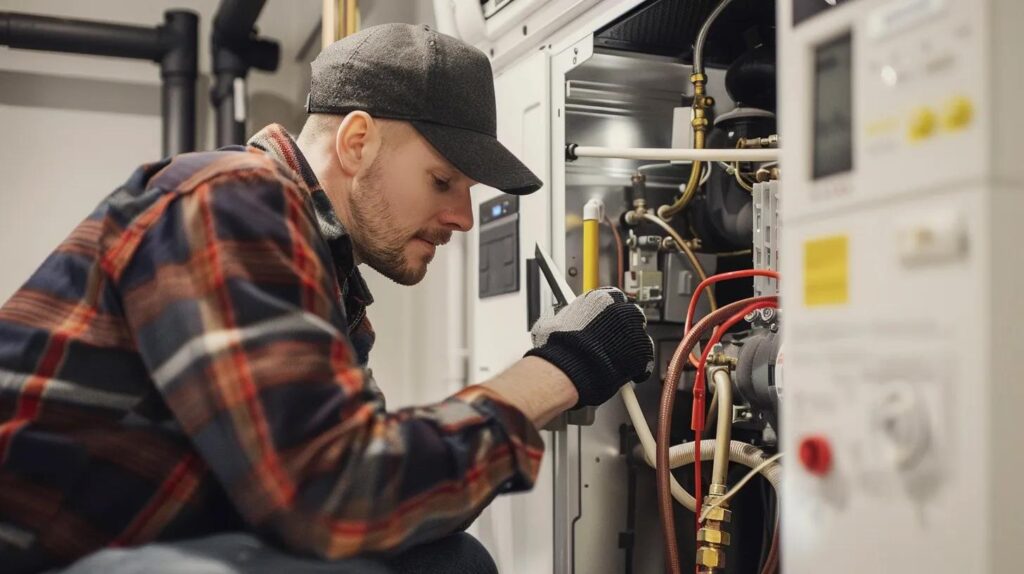
Technicians inspect the heat exchanger for cracks, burners for correct flame and combustion, the blower assembly for wear and proper airflow, and the electrical connections for corrosion or loose terminals. They also assess the thermostat for correct calibration and test safety interlocks and limit switches to ensure the unit shuts down under unsafe conditions. Visual inspection of venting and chimney, plus measurements of draft and CO levels during operation, complete the safety picture and allow technicians to recommend targeted repairs where necessary. These component-level checks are why professional service uncovers hidden risks that visual homeowner checks cannot detect.
What Cleaning, Lubrication, and Adjustments Are Performed?
Cleaning typically includes removing dust from the blower wheel, vacuuming combustion chamber deposits, and wiping burners and flame sensors to ensure reliable ignition and stable flames. Lubrication points such as motor bearings and fan shafts are serviced as needed to reduce friction and noise, while adjustments cover belt tension, gas pressure calibration, and airflow balancing. Technicians may also clean condensate traps (if applicable) and reseal duct connections to reduce leakage. These tasks together restore efficiency, reduce cycling, and lower the likelihood of premature component failure.
For homeowners ready to convert this checklist into scheduled service, NATE-certified technicians perform these inspections and adjustments to industry standards, and many local providers offer maintenance plans that include scheduled tune-ups and priority service. Lyon Heating and Cooling LLC lists maintenance plans and scheduling options for Wausau, WI customers, allowing you to align regular professional inspections with the checklist above and keep a predictable maintenance cadence.
What DIY Furnace Maintenance Can Homeowners Perform Between Professional Services?
Homeowners can safely perform several routine tasks that keep a furnace running smoothly between professional visits; these tasks improve efficiency and reduce stress on key components without breaching safety boundaries. Common homeowner maintenance includes changing filters, keeping vents and returns unobstructed, checking thermostat batteries/settings, and visually inspecting for obvious signs of wear or leaks. The table below summarizes DIY tasks, recommended frequency, and the impact on efficiency and safety to help you prioritize what to do monthly or seasonally. After the table, the subsections explain filter replacement schedules and warning signs that require a professional.
| Task | Recommended Frequency | Impact (Efficiency / Safety) |
|---|---|---|
| Replace air filter | Every 1–3 months (see type) | Maintains airflow and reduces strain on blower |
| Clear vents & returns | Monthly visual check | Ensures balanced airflow and consistent heating |
| Visual inspection | Monthly | Early detection of leaks, corrosion, or loose panels |
| Thermostat check | Seasonally | Prevents miscalibration and unnecessary cycling |
Practical homeowner tasks protect the system and prevent build-up that leads to bigger problems:
How Often Should You Replace Your Furnace Air Filter?
Filter replacement frequency depends on filter type and household conditions: basic fiberglass filters may need replacement every 30 days, pleated filters generally every 90 days, and higher-efficiency HEPA or MERV-rated filters vary based on load and manufacturer guidance. Homes with pets, smokers, or allergy sufferers commonly require more frequent changes — sometimes monthly — to avoid airflow restriction and reduced indoor air quality. Replacing filters is simple: power down the furnace, remove the old filter noting airflow direction, insert the new filter with correct orientation, and restore power; this routine step directly supports blower longevity and combustion efficiency. Keeping a filter-change rhythm reduces dust accumulation on burners and coils and makes each annual service more effective.
What Are Signs You Should Call a Professional HVAC Technician?
Certain symptoms mean you should contact a professional promptly: activation of a carbon monoxide alarm, persistent unusual odors (like gas), loud banging, grinding noises from the furnace, visible cracks or rust on the cabinet, and steep drops in heating performance despite thermostat adjustments. Moderate concerns — increasing energy bills, intermittent cycling, or minor air quality changes — justify scheduling a tune-up sooner than annual if they persist. Categorize urgency: life-safety signals (CO alarms, gas smell) require immediate service, while efficiency symptoms warrant prompt but non-emergency scheduling. Being able to distinguish these signals helps homeowners protect safety while avoiding unnecessary service calls.
How Do Furnace Maintenance Plans Protect Your Investment in Wausau, WI?
Maintenance plans bundle routine tune-ups, priority service, and discounts to provide predictable care that reduces unexpected repair costs and prolongs equipment life. In the Wausau, WI climate, where seasonal transitions are moderate but demand spikes in cooler months, a plan that schedules pre-season inspections and offers priority dispatch can prevent service backlogs and emergency rates. Typical plan features include scheduled annual tune-ups, priority scheduling during peak season, and service discounts for members; these provisions combine to reduce downtime and spread the cost of upkeep. The following bulleted list outlines common plan features and the financial and operational benefits they deliver for local homeowners.
- Priority scheduling to avoid long waits during seasonal demand peaks.
- Regularly scheduled tune-ups that stabilize efficiency and detect wear early.
- Member discounts on repairs and parts to lower unexpected expenses.
What Are the Benefits of Lyon Heating and Cooling LLC’ Maintenance Plans?
Lyon Heating and Cooling LLC offers maintenance plans designed for the Wausau, WI area that emphasize preventive care, local responsiveness, and certified workmanship. Plan members typically receive scheduled tune-ups that include the checklist tasks described earlier, priority service when problems arise, and potential discounts on needed repairs — all delivered by a NATE-certified team familiar with local system needs and weather-related stressors. This approach reduces the administrative burden for homeowners while ensuring a documented maintenance history that supports reliable operation. Joining a maintenance plan is a practical way to convert ad-hoc repairs into a predictable maintenance budget and timely service during seasonal demand.
How Can Preventative Maintenance Save You Money on Repairs?
Preventative maintenance reduces the likelihood of emergency breakdowns that often carry higher labor and parts costs; by catching small issues such as a failing blower bearing or degrading capacitor early, technicians can replace inexpensive parts instead of allowing failure to cascade into a heat exchanger or control board replacement. Industry analyses through 2024–2025 suggest that routine service can defer or prevent large-scale replacements and reduce unplanned repair bills by a substantial margin over the equipment’s life. A simple cost comparison illustrates the value: the modest annual maintenance fee plus occasional minor parts is typically far lower than the cost and disruption of a mid-winter system replacement. These savings accrue both as direct repair-cost avoidance and as extended equipment lifespan through balanced, efficient operation.
To request a maintenance plan or schedule a pre-season tune-up in Wausau, WI, homeowners can contact Lyon Heating and Cooling LLC to learn about plan options, availability, and local scheduling; requesting a quote or signing up for a plan converts the maintenance checklist into a recurring protective service that minimizes risk and maximizes value.
Conclusion
Regular furnace maintenance is essential for ensuring safety, efficiency, and longevity of your heating system. By scheduling annual inspections, homeowners can prevent costly repairs and enhance energy savings, ultimately leading to a more comfortable living environment. Don’t wait for a breakdown; take proactive steps to protect your investment by contacting a local certified technician today. Explore our maintenance plans at Lyon Heating and Cooling LLC to keep your furnace running smoothly all season long.